

Understand the factory before designing the system
SAK combines enterprise software experience since 2008 with hands-on fastener manufacturing experience since 2015. Practitioner judgement defines the process and its exceptions before Mizantra is configured. We map the solution, make responsibilities explicit and support realistic testing, role-based training and adoption.
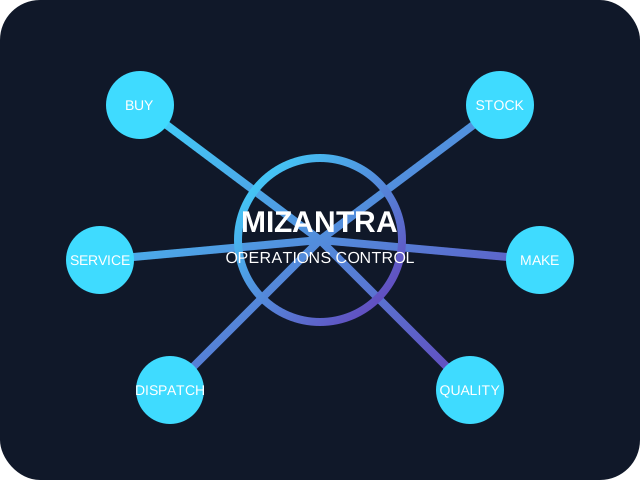
An operations-first manufacturing operations system
Mizantra combines ERP transaction control with production execution. It connects management, finance, sales, purchasing, stores, vendors and the shop floor in one controlled operating environment.
It follows the operational chain from purchasing and receipt through inventory, production, quality, sales, dispatch, warranty and service—replacing fragmented spreadsheets and disconnected approvals with traceable actions.
Request a demonstrationThe office, stores, vendors and shop floor—connected
ERP Control
Controlled transactions across finance, procurement, sales and stores.
Production Execution
Job, material, workstation, output and quality activity on the shop floor.
Workflow Automation
Approval and exception workflows designed around the operating process.
Management Intelligence
Operational dashboards, pending actions and drill-down visibility.
Governed AI
Data-grounded recommendations with context, guardrails and approval gates.
Internal operating example: controlling outside processing
This example explains the judgement behind the workflow; it does not claim a universal financial outcome.
1. Diagnose the control gap
Vendor-held material, partial returns, scrap and inspection evidence can leave stores, quality and accounts with different answers.
2. Agree the improved process
Define identity, quantity, ownership and evidence at issue, receipt, inspection and reconciliation before payment proceeds.
3. Support it in Mizantra
Record vendor WIP, multiple outputs, raw-material return, scrap, line-level quality and charge reconciliation in one accountable flow.
Twelve connected capability areas
Governance & Master Data
Roles, permissions, approvals, audit history and controlled masters.
Procurement & Spend
Requisitions, purchase orders, receipt, supplier actions and payables context.
Inventory & Traceability
Warehouses, movements, issues and batch, serial or UID history.
Sales, Dispatch & Service
Quotation, sales order, dispatch, warranty and after-sales service.
Planning & Shop Floor
BOMs, routings, job orders, material issue, WIP and completion.
Outside Processing
Material outward, vendor WIP, receipt, return, scrap, QC and charges.
Quality Management
Incoming and production inspections, rejection, NCR and evidence.
Maintenance & Assets
Preventive activity, breakdowns, work orders, spares and asset history.
Finance, HR & Configuration
Transaction context, workforce workflows and market-aware configuration.
Dashboards & Value
Exception views, operational drill-down and evidence-linked benefits.
Integrations & Automation
Configured connectors and workflow rules subject to technical validation.
Documents, Reports & Mobile
Attachments, printouts, reports, exports, notifications and responsive access.
Designed around manufacturing control
Factory-shaped workflows
The data model follows physical material and production events, not generic CRM records.
End-to-end traceability
Receipt, stock, production, dispatch, warranty and service can share one evidence chain.
Quality in the operation
Inspection, NCR and supplier-quality actions sit inside the operating record.
Control by design
Permissions, maker-checker controls, approvals and audit history support accountability.
Implementation ownership
Diagnosis, configuration, role-based testing, training and adoption are treated as one programme.
Implementation
Diagnose. Prioritise. Configure. Adopt. Measure.
Mizantra is configured around the agreed operating model and verified through representative end-to-end scenarios before controlled go-live.
Live workflow acceptance, configured integrations, multi-plant operation and outcome measures are validated for each implementation; they are not presented as universal guarantees.